After a full day in Pemba, Kelly and I were not suuuuper impressed. So we decided to make the trip to a nearby island named Ibo. It's in Quirimbas National Park in Northern Mozambique.

 The next morning, Kelly and I went for another exploring run on the island. However, we started a bit late and it was REALLY hot with beautiful clear skies, so most of our run was just walking through villages and bush. It's always best to explore places and foot and running helps because it prevents me from getting impatient! We wandered down lovely streets with deserted buildings intermixed with coral-structure village huts greeting people "Bon dia" or good morning. Portuguese is a very smooth and romantic language! I've been enjoying speaking something a bit different.


That day we traveled via so many modes of transport. We started with a hitch to town, then we got in a chapa (a mini bus) for an hour. Next we were in a matola or a flatbed truck for an hour. Then we were dropped at a dirt road. We made friends with some people there at the "trading center;" Kelly helping some boys with their English homework and both of us enjoying feeling like we were back in the village for a bit. There were no cars or trucks going in our direction for over an hour, so I was starting to get a little nervous. Right when I was wondering if we'd reach the island that day, a car with three azungus in it turned the corner. We wildly waved our arms and thankfully they stopped. We rode with them to the dhow port where we then took a 30 or so minute motorized boat to Ibo.
When we arrived, we found a place to stay (a great local place that's also super cheap!!!) and then wandered around the main streets of the island as the sun was hitting its golden hour. The island is an old trading port from years and years ago. It used to be the second biggest slave trading island outside of Zanzibar off the coast in Tanzania. Now though, the trading port has moved and the island is a quiet place with crumbling beautiful old buildings with Muslim architectural features. The people have been so friendly though-and there's a full blown village on the island as well as an airstrip! Kelly and I keep joking that it would be a great place for a honeymoon. That evening we had some beers on a roof before returning to our lodge and having shima and fresh delicious fish!! That night, tired from traveling, we passed out pretty early.
 |
| The woman running our lodge making fresh mandasi |
 The next morning, Kelly and I went for another exploring run on the island. However, we started a bit late and it was REALLY hot with beautiful clear skies, so most of our run was just walking through villages and bush. It's always best to explore places and foot and running helps because it prevents me from getting impatient! We wandered down lovely streets with deserted buildings intermixed with coral-structure village huts greeting people "Bon dia" or good morning. Portuguese is a very smooth and romantic language! I've been enjoying speaking something a bit different.
 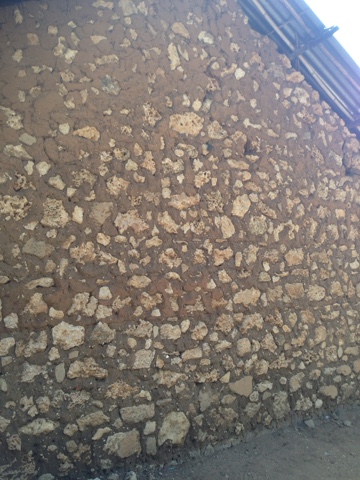 |
| How houses are built |

After our run, we went with our new friends on a trip to a lighthouse on the other side of the island. We walked on open, sandy paths in the blazing sun before we popped out onto the shore. We traversed along sand and coral and tide pools for the last hour, trying not to slip and fall in the water (I only fell once).. We finally arrived at the "lighthouse" which was actually just like a stone set of steps up to an overlook. It was a beautiful view regardless though.

So then we walked back and went directly to a pool to cool off! We hung out at this one lodge drinking Mozambique beer, enjoying the pool, and watching the sunset. We had dinner at the same place-a delicious combination of pasta, peppers, and seafood!! Kelly and I also splurged on fancy, beach cocktails!

